Firewall rules describe which traffic is accepted, rejected, logged, marked or redirected on an interface.
They are managed in Your Firewall › Firewall Rules and applied automatically a few seconds after each change.
¶ The rules table
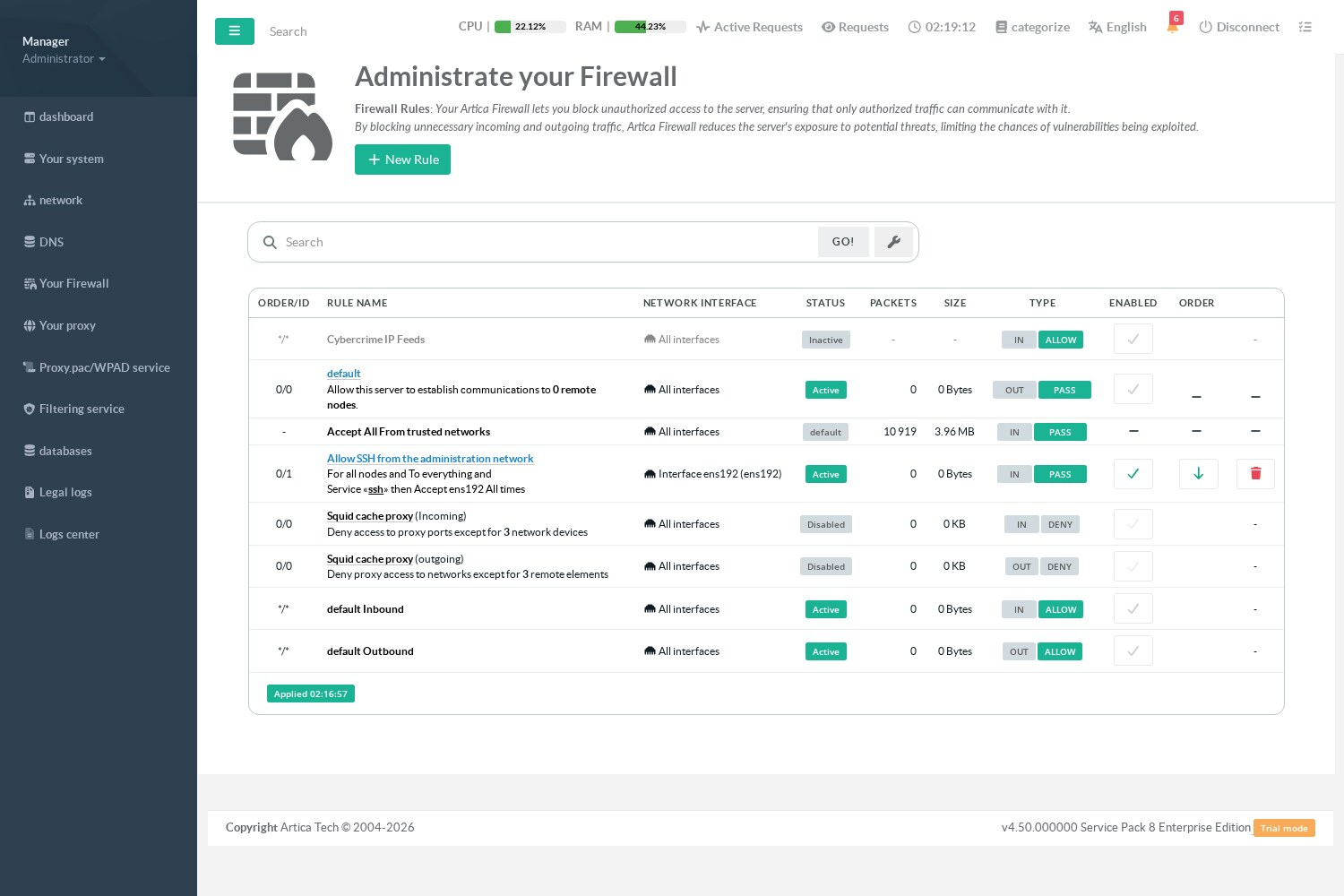
| Column | Meaning |
|---|---|
| Order/ID | Position of the rule in its interface, and its identifier. |
| Rule name | Click it to edit the rule. Below the name, a sentence summarizes what the rule does (sources, destinations, services, action, time). An orange label in front of the name means the rule cannot be applied, with the reason (for example This network interface is excluded from the firewall). |
| Network interface | The interface whose traffic the rule filters, or All interfaces. |
| Status | Active: the rule is in the kernel. Inactive: enabled but not in the kernel (see the orange label). Disabled: switched off. |
| Packets / Size | Packets and bytes that matched the rule since it was last applied, summed over all the kernel lines the rule produced. |
| Type | Direction (IN for traffic reaching the interface, OUT for traffic leaving it) and action. |
| Enabled / Order | Switch the rule on or off; move it up or down; delete it. |
The badge at the bottom of the table shows when the rules were last applied, or how many rules the kernel refused (click it to see the errors). See How the firewall applies your rules.
¶ Built-in lines
Some lines are not rules you created; they show what Artica adds automatically:
- Cybercrime IP Feeds: blocks the addresses of the cybercrime feeds when that feature is enabled.
- default — Allow this server to establish communications to N remote nodes: the published servers the appliance must always reach.
- Accept All From trusted networks: the trusted networks are accepted before any rule (see the order of protection rules).
- Squid cache proxy (incoming / outgoing): the dedicated rules for the proxy service.
- default Inbound / default Outbound: the policy of the interfaces that are not linked to the firewall, with their counters.
¶ Create a rule
Click New Rule:
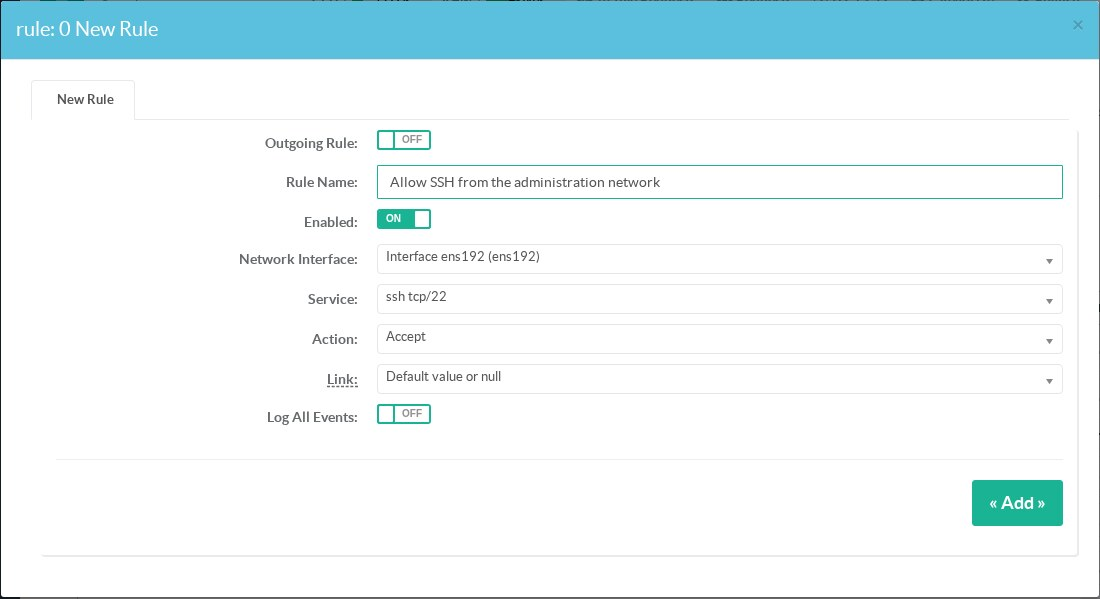
| Field | Meaning |
|---|---|
| Outgoing Rule | Checked: the rule filters traffic leaving the interface (to the network). Unchecked: traffic reaching the interface. |
| Rule Name | A name that explains the purpose of the rule. |
| Network Interface | The interface concerned, or All interfaces. The interface must be linked to the firewall. |
| Service | A protocol and port set (ssh, https, dns…). Leave the default value to match every protocol. More services can be added in the Firewall services tab. |
| Action | What to do with the matching traffic, see below. |
| Link | Only for the action Send through a link: the link of the link balancer. |
| Log All Events | Logs every packet that matches the rule, before applying the action (at most 1 line per second, bursts of 5). |
¶ Actions
| Action | Effect |
|---|---|
| Drop | Rejects the traffic: the sender receives a TCP reset or an ICMP "unreachable", which is faster to diagnose than a silent drop. Rejections are logged with the prefix ARTICA:REJECT: (at most 1 line per second). |
| Accept | Accepts the traffic; the following rules are not evaluated. |
| Tproxy method (transparent proxy) | Sends the matching web traffic to the local proxy without any client setting. |
| Mark packets | Marks the packets (mark set in the options tab) so that they follow a dedicated routing table, for example to leave through another gateway. |
| Forward to another gateway (next hop) | Routes the matching traffic to another gateway instead of the default one. |
| Duplicate traffic | Sends a copy of the traffic to a target address. See MIRROR. |
| Log only | Logs the packets with the prefix ARTICA:LOG:<rule id>: and lets them continue to the next rules. Useful to observe a flow before blocking it. |
| Stop checking the rules of this interface | Stops evaluating the rules of the interface for this traffic: the default policy of the interface is not applied, and the packet goes back to the main chain, where it is accepted unless another module blocks it. |
| Send through a link | Sends the traffic through a chosen Internet link of the link balancer. |
Click Add. The rule appears in the table and is applied a few seconds later.
¶ Refine a rule
Click the name of a rule to open it. The window has several tabs:
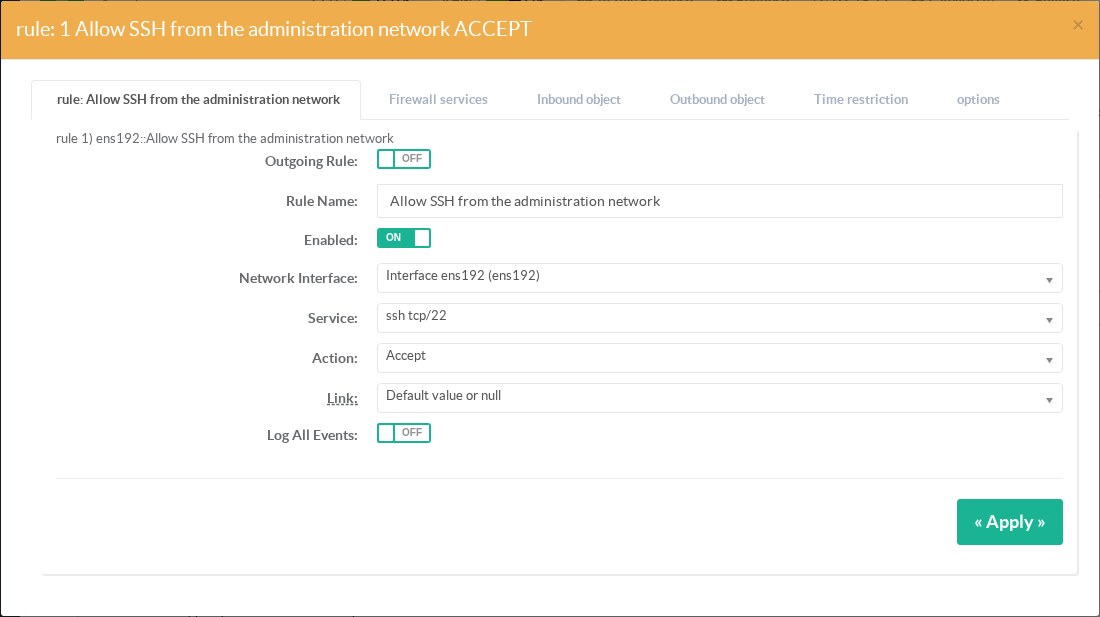
- rule: the fields of the creation form.
- Firewall services: add several services to the rule (for example http, https and ssh at once).
- Inbound object: restrict the rule to sources — addresses, networks, countries, DNS names, MAC addresses — through firewall objects.
- Outbound object: restrict the rule to destinations, in the same way.
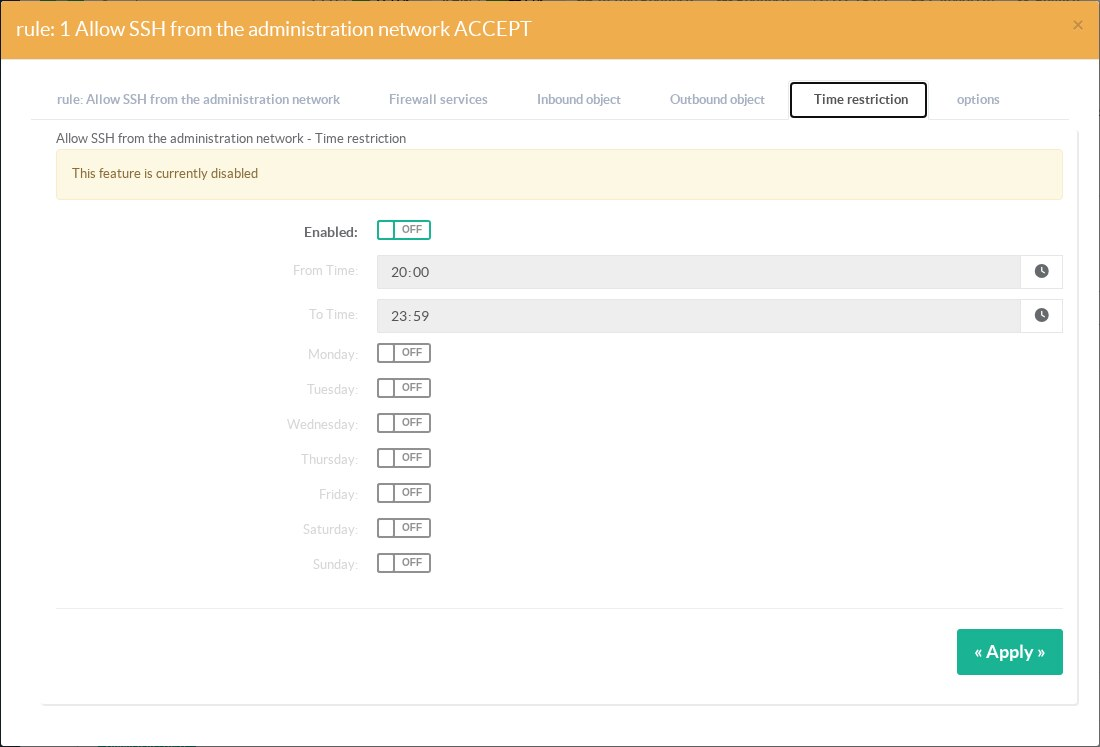
- Time restriction: apply the rule only on some days and between two times.
- options: settings specific to the action — the mark of a Mark packets rule, the port of a transparent proxy rule, or a bandwidth limit when the firewall extension modules are installed.
When a rule has several sources, destinations and services, Artica creates one kernel line per combination; the counters of the table add them up.
¶ Order of the rules
- The rules of an interface are evaluated from top to bottom; the first Accept, Drop or Stop checking rule that matches ends the evaluation.
- Rules on All interfaces are applied to every linked interface.
- Use the arrows of the Order column to move a rule.
- The protection modules (trusted networks, CrowdSec, black lists…) are always evaluated before your rules.
- Outgoing rules only apply to new connections: traffic leaving the interface is allowed unless an outgoing Drop rule matches it, and replies to established connections are never filtered.
¶ Examples
¶ Allow SSH only from the administration network
- Create a firewall object Administration network containing
192.168.10.0/24. - Create a rule on the WAN interface, service ssh, action Accept, inbound object Administration network.
- Set the default policy of the interface to Finally deny all: SSH from any other source is rejected.
¶ Observe before blocking
- Create the rule with the action Log only.
- Check the firewall events for a few days.
- Change the action to Drop when you are sure of the matched traffic.